Most Aqua Kelik

Showing posts with label Fish. Show all posts

Tips : Some Basic Facts about Fishing Gear

0 comments
TwitThis


In fishing, it is very important to an angler’s success that he starts with the proper equipment. He may purchase or own the finest equipment in the world, but when it is assembled and put into use, it may prove to be a very decided handicap.

To guard against this, it is important that the individual items of tackle be properly balanced one with the other. Unbalanced equipment has been responsible for more difficulties and failures of beginners than any other single factor.

Fishing Rod

To fish with a good rod is to really enjoy fishing. It is much easier to learn with a good rod than with one of an inferior quality. This is no commercial plug to encourage the sale of expensive rods, but just a word of warning to prevent any possible or unnecessary discouragement because of using a rod that would be decided handicap to a competent caster.

Fishing Lines

This item of fishing gear must be selected with some careful considerations if anglers are expecting to enjoy fishing or casting.

This is because the size and weight of fishing lines made by various manufacturers are not entirely uniform, that is, the diameter of the line by one manufacturer may be slightly larger or smaller than a line by another manufacturer even though both bear the same size marking.

The Leader

The leader is also a very important item, and unless it is selected with care and consideration in comparison with the size of the line, the caster will have trouble in making it extend straight out from the line when casting.

The chief function of the leader is to serve as an invisible connection between the line and the lure.

Fishing Flies or Lures

The flies may range in size, from the tiniest used, which might be number 18 or 20, up to flies tied on number-2 hooks or larger. The heavier flies or lures create; more wind is needed. It also requires the use of heavier equipment or more power on the part of the caster during the back cast and forward cast.

Reels

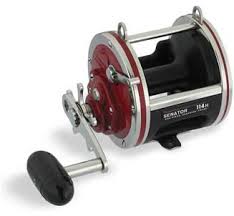
The reel may be automatic or single action, but in any event, it should be larger enough to hold the usual 30 yards of fishing line without crowding it on the reel spool.
The reel should weigh from 1 ¼ to 1 ½ as much as the bare rod. The reel itself is of no specific use in casting or fishing except as a storage place for the line.

Consequently, the entire equipment should always be in good condition. Other wise, achieving success in fishing is impossible.

Info AFM filtration systems

0 comments
TwitThis


dry1 | AFM filtration systems
dry1 > AFM filtration systems
Prices shown are all ex-works Edinburgh Scotland

Tips BEST LURES TO USE IN FISHING

0 comments
TwitThis


The evolution of fishing gear and accessories along with the development of the bass fishing industry brought about the development of various lures specifically used for different fish species.

There are many types or class of lures and they all depend on what type of fish works for them. Many only work for specific types but some cover a wide range of species of fish.

Below are some of the typical lures used for fishing.

Light Standard Casting Lures

For Standard casting lures, they are mostly able to attract a wide range of fish varieties from albacore, bluefish, bonita, oho and crappies. These lures are also excellent for certain species of bass fish and work best when retrieved from water at low to medium speed. They pass through water with undetectably synthetic material.

Their sizes are excellent for lightweight fish and a host of freshwater species. They range from 1/16 oz. to 3 oz.

The hand painted eye is enticing enough to allow schooling of fish. This feature allows for more chances of trapping one of the target fish in the water.

Heavy Standard Casting Lures

Heavy Standard Casting Lures are excellent for quite heavy fish specifically, walleye and bass.  While the lightweight lures are used in most circumstances, it was shown that heavy counterparts provide more reliable fishing output.

Moreover, the heavy standard lures are able to catch fish than diamond and light standard casting lures.

Long Casting/Jigging Lures

Perhaps the most popular among the fishing lures are the long, tapered jigging lures. They are perhaps the most commonly used fishing lures among the fishermen in Florida, Mississippi and Louisiana.

Just recently, it was found out that the long casting lures work best for catching trout and pike. They were also found to effectively catch stripers and bluefish. They can catch tuna and walleye in a breeze!

Unlike heavy standard lures, this gear won’t produce good fish-catch output up to 180-200 ft under water but be sure to effectively match your lure color, bait and related accessories to maximize performance.

Deadly Diamond Lures

These lures are one of the smallest with sizes ranging from 1/8 to 1oz. They can seamlessly attract attention among fish and could form a school of fish in a minute!

The reason is it lies on its structural surface formation and cut. The top handle is cut like a diamond and causes the reflection of light striking on its surface. The diamond lures are best for catching bass fish varieties, crappie and stripers although they work on a small range of fish species.

Nice BASS FISHING FACTS AND MORE

0 comments
TwitThis


Bass fishing has a fascinating history. It started in the late 18th century and continues to progress until today.

It probably was originally practiced in search for food among the people in the south of the United States. Since then, it has started gaining numerous audiences of all ages and nations. Today, countries such as Australia, Cuba, South Africa, United States and most of Europe participate in this kind of event.

Timelines

Nice Alaska Fishing Lodge: The Nature’s Abode

0 comments
TwitThis


Recreation is an important aspect in the life of human beings. Anglers represent the major group of leisure seekers, and have a determined advantage over the other groups who make use of nature’s wonderful creatures and elements for food.

Consequently, the popularity of fishing in many areas had continuously dominated the society.  That is why  along with its series of activities, people now realize the need for fishing lodges especially in places where fishing activities seem to never end.

Among all fishing lodges available in the industry today, the Alaska Fishing Lodges are among the most treasured and most popular fishing lodges in the United States.

The Alaska Fishing Lodge provides its customers full customer service satisfaction with their wide array of fishing activities and endless strings of fishing fun.

Normally, Alaska Fishing Lodges are made up of logs; sturdily build to provide each angler optimum convenience and comfort. It is known for its spacious interiors, creatively decorated with the right embellishments, thereby, setting the mood for fishing and wilderness.

In addition, because it carries the true Alaskan heritage, Alaska Fishing Lodges offer services and products that can be afforded by anyone.  With its affordable rates, the place is inhabited by people, who mostly want to enjoy life and fishing but cannot afford to buy the pleasures in expensive beaches and lodges.

Best of all, Alaska Fishing Lodges are perfectly located in areas where the waters are abundant with the different species of fish. Usually, these lodges are situated in a place where trout, northern pike, and grayling mostly inhabit the waters.

On the other hand, most Alaska Fishing Lodges are built big enough to occupy 16 guests, in which each guest can avail of personal and individualized services.

Moreover, this type of lodge also houses a place where king salmon are abundant especially during the months of June and early part of July. Most lodges also provide a wide variety of fishing equipment, from rods to tackles and lines.

With all these beautiful features present in every Alaska Fishing Lodge, there is no better place to enjoy fishing and the wilderness like what this particular lodge can offer.

Staying in an Alaska Fishing Lodge is, indeed, an ultimate fishing experience.

World International Aqua Service

0 comments
TwitThis

Credit to : http://www.aquae.com/

Construction, Design and Technology

Specimen Supplies

Consultants

Information & Services

Tips : Proper Feeding Techniques using Phytoplankton and Zooplankton

0 comments
TwitThis

http://www.liveaquaria.com/


With the appropriate liquid invertebrate food and the proper feeding technique, the nutritional needs of your reef invertebrates will be met without compromising water quality or the health of your inhabitants.

More :
http://www.liveaquaria.com/


While researching the dietary needs of reef invertebrates, many beginning reef hobbyists encounter an unfamiliar category: liquid invertebrate foods. As a supplementary diet, liquid foods provide additional nutrients for reef aquariums, especially those with a large population of corals and other invertebrates. However, as with any food, liquid invertebrate foods can compromise water quality if used improperly. Determine the dietary requirements of your particular invertebrates and follow a specific feeding regimen to maximize the benefits of liquid invertebrate foods.
Species Requirements
Liquid invertebrate foods are available in two basic formulations, one comprised of phytoplankton and the other with zooplankton.
Invertebrates with fine feathery feeding apparatus or gills tend to feed on phytoplankton and invertebrates with larger polyps or more robust feeding apparatus prefer zooplankton.
Feeding Regimen
As with any food, it is crucial not to overfeed your invertebrates. Liquid invertebrate foods are nutrient-rich solutions and uneaten portions will break down to compromise water quality, leading to aggressive algae growth. It is easy to overfeed with liquid invertebrate foods, especially in reef aquariums that contain fish and have a sparse population of corals or invertebrates. To avoid this, try either of these approaches:
  • Feed sparingly -
  • Liquid invertebrate foods are supplemental foods and should be used in small quantities. Remember, when you feed your fish, you are indirectly feeding your invertebrates as well.
  • Target feed -
  • Minimize waste and overfeeding by using a clean medicine dropper, or pipette to squirt a small amount of the liquid invertebrate food about an inch or two from the intended invertebrate. By targeting the specific animal, the food will be utilized efficiently.
In the ocean, plankton is one of the smallest particles in the food web. Yet, it is responsible for supporting an incredibly diverse array of species, from the barely visible planktonic feeders to the largest predators. BioPlankton is a preserved algae feed that meets the needs of the most demanding saltwater aquarist and mariculture professional. Through the dynamic of the marine food web, BioPlankton and CoralPlankton provide nutrient-rich plankton to direct and indirect consumers in the captive marine food web.
     

New Sharks, Eels, and Loaches for Sale

0 comments
TwitThis

This page lists some of the Sharks, Eels, and Loaches for sale at our online retail tropical fish store. Click here for more information about how to buy fish from us.


This picture shows a group 4.5"-long Clown Loach swimming near its favorite cave.  http://www.aquariumfish.net

External filter (Millenium 2000)

1 comments
TwitThis
As you can see, I use an external filter (Millenium 2000) which has a capacity of filtering 600 liters per hour. The light is improvised. I never bothered to buy another T5 lamp as the one I have works just fine. The rocks I have are also improvisations as I found them in the streets. 


This is my fish tank back in 2005. There is a Pseudotropheus Crabro up front and a Tilapia Buttikoferi to the right side among the plants. At the moment I have three Chipokae and a Pseudotropheus Socolofi in it.
->from Marcos Gazzan

Cichlids' fish tank site

0 comments
TwitThis
This is my Cichlids' fish tank site. Here I make available information about the fish tank I have at home and the cichlids living in it.

You will also find a brief description of some of the species (see profiles) I have had in my fish tank, which includes their basic characteristics, origins, etc.


African Cichlids Fish Tank 2006


Fish

0 comments
TwitThis


Characoidae
Siluroidae
Cyprinoidae
Characoidei Salmons
Siluroidei Catfish


Other
Percoidei,Teleostei Other:
Poeciliidae+Goodeidae Livebearers
Cyprinodontidae Killifish


Anabantoidae
Cichlidae

Anabantoidae Labyrinthfish
Cichlidae Cichlids


Fish general
More general information
about fish can be found here.
History
A brief history of aquarium and fish keeping.

Fish classification
How fish are classified
according to the current beliefs


Free Blog Templates

Powered By Blogger

Page Rank Checker

Check Page Rank of any web site pages instantly:
This free page rank checking tool is powered by Page Rank Checker service

Easy Blog Link

Twitter Blog Templates © Copyright by The AquaVilles Interactive Site | Template by BloggerTemplates | Blog Trick at Blog-HowToTricks